
 English
- All
- Product Name
- Product Keyword
- Product Model
- Product Summary
- Product Description
- Multi Field Search
English Views: 0 Author: Site Editor Publish Time: 2026-08-24 Origin: Site


The global manufacturing landscape faces relentless pressure today. Appliance makers must constantly optimize their bill of materials to stay competitive. Volatile global copper prices make this challenge harder every single quarter. Switching from traditional copper to aluminum windings in a washing machine motor is no longer just a simple cost-cutting compromise. It represents a highly strategic engineering decision. Choosing the wrong material can lead to high failure rates, expensive recalls, and a damaged brand reputation.
This article provides procurement managers and appliance engineers with a transparent, evidence-based framework. We will help you evaluate exactly when an Aluminium Winding Motor becomes a viable, reliable substitute. You will also learn when traditional copper remains strictly necessary for your specific product line. By the end, you will have the technical clarity needed to make confident procurement choices.
Copper prices fluctuate wildly on global commodity markets. These sudden shifts directly impact your manufacturing margins. Electric vehicle production and renewable energy grids consume massive amounts of copper globally. This high demand keeps copper prices structurally elevated. Appliance manufacturers operate on razor-thin margins. You simply cannot absorb these cost spikes without passing them on to consumers. Finding alternative materials has become a survival tactic for many brands.
Advancements in material science have paved the way for reliable alternatives. In the past, switching metals often led to catastrophic hardware failures. Today, modern magnet wire technology makes the transition to aluminum highly viable. Manufacturers now use specialized alloys and advanced enamels. Engineers have also developed specialized bi-metallic connectors. These components prevent the rapid degradation historically associated with aluminum electrical connections.
The core objective here is not finding a universally superior metal. Instead, you must align your component specifications with your product strategy. We define success through three specific criteria:
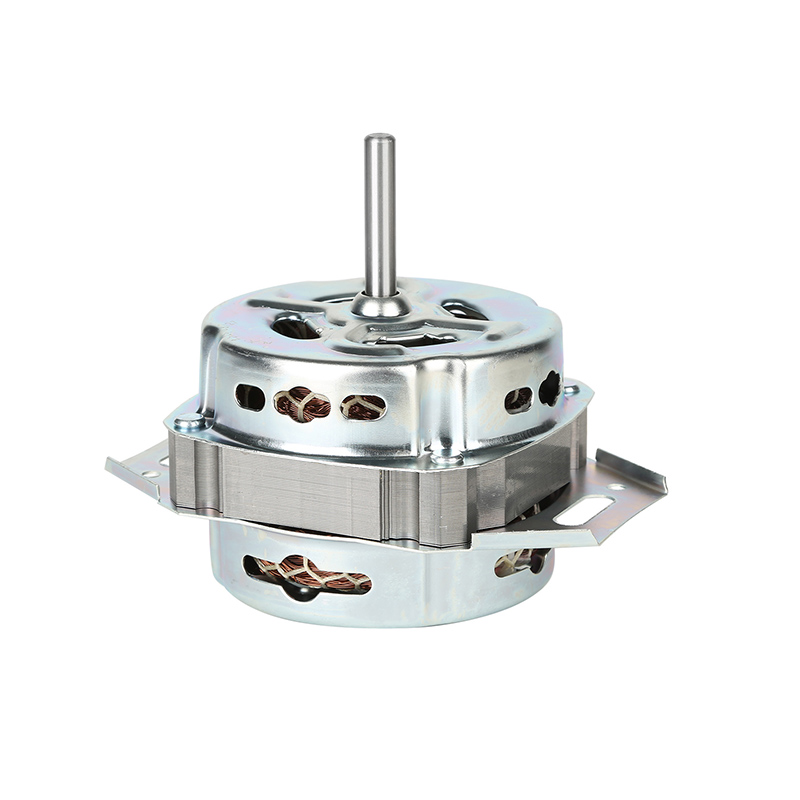
Electrical conductivity drives the entire motor design process. Copper serves as the industry baseline, boasting an international annealed copper standard (IACS) rating of 100%. Aluminum offers roughly 61% of this conductivity. To achieve the exact same electrical resistance, aluminum requires roughly 1.6 times the cross-sectional area of copper. You cannot simply swap the wire gauge and expect identical performance.
This physical reality profoundly impacts stator design. A standard washing machine motor designed for copper usually lacks the internal space for thicker aluminum wires. Engineers must specify larger stator slots to accommodate the bulkier material. They must also modify the lamination stacks. These structural adjustments ensure the magnetic flux remains optimized. If you ignore these spatial constraints, you risk poor winding fill factors and reduced mechanical power.
Thermal management dictates motor survival. Aluminum expands significantly more under load than copper. When the wash cycle hits its peak spin speed, the internal components heat up rapidly. The wire expands inside the stator slots. If the slot liners lack adequate flexibility, the expanding wire can pierce its own enamel coating. This causes deadly short circuits.
Increased heat generation requires precise thermal management. An Aluminium Winding Motor generates more resistive heat than its copper counterpart during heavy wash cycles. Engineers must specify robust insulation classes to prevent premature motor burnout. Upgrading to NEMA Class F (155°C) or Class H (180°C) insulation systems becomes mandatory. These upgrades protect the appliance when consumers overload the drum or run back-to-back heavy-duty cycles.
Physical weight serves as a major advantage for aluminum. Aluminum possesses roughly 30% of the density of copper. Even after increasing the wire gauge to match conductivity, an aluminum coil remains significantly lighter. This weight reduction directly translates to a lighter finished component.
Downstream economic benefits scale quickly for global appliance distributors. A lighter motor reduces the total unboxed weight of the washing machine. You can load more units onto a shipping container before hitting maximum weight limits. Lighter appliances also reduce localized freight and last-mile delivery costs. These logistical savings often rival the raw material savings themselves.
| Property Metric | Traditional Copper | Electrical Grade Aluminum |
|---|---|---|
| Conductivity (IACS) | 100% | ~61% |
| Required Cross-Section | Baseline (1.0x) | 1.6x larger |
| Density / Weight | 8.96 g/cm³ (Heavy) | 2.70 g/cm³ (Light) |
| Thermal Expansion Rate | Lower | Higher |
Connecting aluminum wire to standard copper terminals represents the single most common failure point. When these two distinct metals touch, they create a bi-metallic junction. Add the inherent humidity inside a washing machine chassis, and you create a perfect environment for galvanic corrosion. The aluminum acts as an anode and sacrifices itself, rapidly corroding away.
You cannot use standard soldering techniques here. Engineers must mandate specialized crimps, piercing connectors, or sealed transition terminals. These advanced connectors pierce the enamel and create a gas-tight seal around the wire. This seal prevents oxygen and moisture from reaching the joint. Failing to specify these exact connectors guarantees high field failure rates and ruined customer trust.
The physical act of winding the motor introduces new challenges. Automated winding machinery relies on precise wire tension. Copper features high tensile strength. It handles high-speed, high-tension winding smoothly. Aluminum is significantly softer. It stretches, deforms, or breaks entirely under the same machine tension settings.
Factory floors must adapt their equipment. Switching to aluminum requires lower-tension winding heads, modified feed paths, and different spool speeds. This transition involves upfront capital expenditure. Facilities must halt production lines to recalibrate and re-tool the machinery. You must factor this manufacturing friction into your cost-saving projections. If your production volumes remain low, this re-tooling cost will obliterate your material savings.
Field failure rates correlate strongly with winding material quality. Consumers routinely abuse appliances. They load unbalanced bedding, use excessive detergent, and run continuous cycles. Copper handles these thermal and mechanical stresses with incredible resilience. Aluminum demands tighter operational guardrails to survive identical abuse.
An incorrectly specified motor wipes out initial material savings instantly. If an appliance breaks within its warranty window, the manufacturer absorbs the cost of parts, labor, and logistics. A sudden spike in warranty claims can destroy a product line's profitability. You must ensure your supplier engineers the motor specifically for aluminum dynamics. Do not accept a copper-designed stator simply wound with aluminum wire.
The recycling and scrap market views these metals very differently. Copper retains exceptionally high salvage value. Recyclers actively hunt for copper components, creating strong economic incentives for appliance recycling programs. This high recovery rate helps brands hit stringent sustainability targets.
Aluminum is entirely recyclable, yet the economic incentive differs. The scrap value per kilogram remains much lower at the scrapyard. Recyclers often shred aluminum-wound motors alongside lower-grade steel components rather than carefully extracting the wire. This reality may impact your brand's sustainability metrics. It can also complicate compliance with extended producer responsibility (EPR) regulations in strict markets.
| Motor Type | Average Stator Weight | Freight Cost Per 1000 Units | Logistics Rating |
|---|---|---|---|
| Copper Wound | 2.8 kg | Baseline Cost | Standard |
| Aluminum Wound | 1.9 kg | 15% - 20% Cheaper | Highly Efficient |
Aluminum thrives in highly controlled, cost-sensitive environments. You should deploy this material strategically across specific product tiers.
Traditional copper remains unmatched for applications requiring brute force, high efficiency, or extreme longevity.
The choice between copper and aluminum requires a precise balance. You must weigh upfront material savings against downstream engineering requirements. Aluminum offers incredible cost advantages and logistical weight reductions. However, it demands strict thermal management and specialized connectors to function reliably.
An aluminum alternative proves highly capable only when engineered correctly. The stator design, insulation class, and terminal connectors must be purpose-built for the softer metal. Simply swapping the wire inside a legacy copper-optimized design guarantees failure. Copper remains the undisputed champion for premium, space-constrained, and commercial-grade applications.
Take action before finalizing your next procurement cycle. Audit your current field failure rates to understand your true warranty burdens. Review your motor supplier's termination technologies to ensure they use gas-tight bi-metallic connectors. Finally, request a segmented quote outlining both material types to reveal the true cost impact on your specific production run.
A: Yes, through a simple scratch test. Manufacturers often coat aluminum wire in copper-colored enamel to improve thermal properties. If you gently scratch the surface of the winding wire with a blade, true copper remains copper-colored underneath. Aluminum wire will reveal a bright silver core once you scrape the outer enamel away.
A: Efficiency depends entirely on the overall stator design. If the engineer sizes the aluminum wire correctly using a larger cross-section, it can perfectly match the electrical efficiency of copper. This required thickness simply results in a bulkier motor. Poor efficiency only occurs if the manufacturer uses undersized aluminum wire to save space.
A: Not inherently. If properly engineered with correct thermal limits and anti-corrosion connectors, the lifespan remains highly comparable for standard residential use. The majority of early field failures stem from poor manufacturing processes or incorrect crimping techniques, not the chemical properties of the metal itself.
A: We strongly advise against this. Never connect them directly. Direct contact between these two metals causes severe galvanic corrosion, especially in humid environments. If repair is necessary, you must use specialized bi-metallic connectors or anti-oxidant joint compounds to prevent electrical arcing and severe fire hazards.


