
 English
- All
- Product Name
- Product Keyword
- Product Model
- Product Summary
- Product Description
- Multi Field Search
English Views: 0 Author: Site Editor Publish Time: 2026-08-24 Origin: Site


Substandard motor components remain the leading cause of appliance failure today. They consistently drive up Return Merchandise Authorization (RMA) rates and severely damage brand reputation. A successful factory audit moves far beyond a superficial facility tour. Buyers must rigorously validate actual manufacturing capability, supply chain traceability, and long-term financial stability. Unfortunately, many businesses fall into the trap of trusting polished marketing brochures over empirical evidence.
This guide defines a rigorous, evidence-based evaluation framework. We will help you vet a production facility thoroughly before committing to a long-term OEM contract. You will learn how to verify supplier legitimacy, assess advanced production tooling, and spot hidden red flags in early audit reports. By implementing these strategies, you safeguard your supply chain and ensure reliable appliance performance.
Your primary objective during the initial vetting phase is simple. You must confirm the facility actually manufactures motors. Many suppliers operate as middlemen or simple assembly workshops. They purchase pre-wound stators and rotors from unvetted sub-tier suppliers. Partnering directly with a genuine manufacturer prevents hidden markups and eliminates critical quality control blind spots. You gain complete visibility over how your washing machine motor is built from the ground up.
Start by executing a rigorous documentation review. Cross-reference the supplier's business licenses against their ISO 9001 certifications. Pay close attention to the registered physical address. Compare this address against historic export records and shipping manifests. A common mistake buyers make is accepting an ISO certificate at face value. Always verify the scope of the certification. It should explicitly cover motor manufacturing, not just trading or general assembly.
Next, map the factory footprint against workforce records. Request the official HR headcount before your visit. Once on the factory floor, observe the physical layout. Compare the stated worker numbers with the actual active workstations. If HR claims 500 production workers but you only see a fraction of that during a peak shift, you have uncovered a major discrepancy. This often indicates the supplier outsources the bulk of their labor.
Finally, demand complete supply chain transparency. A legitimate manufacturer maintains tight control over their raw materials. Audit their tier-2 supplier list thoroughly. Ask them directly where they source their copper wire, rare-earth magnets, and precision ball bearings. True factories provide specific vendor names and batch tracking documents instantly. Trading companies usually hesitate or provide vague answers to protect their hidden margins.
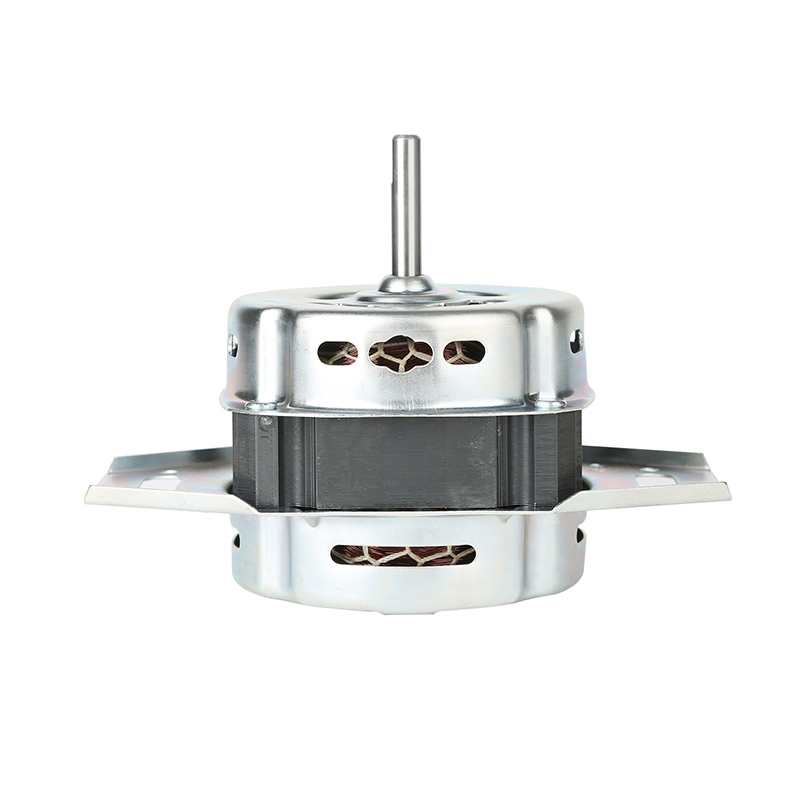
Once you verify legitimacy, shift your focus to actual production capability. You must assess true scalability. Suppliers often boast massive theoretical capacities. You need to verify these assumptions against actual output data. Request historic production logs for standard, high-volume components. For instance, evaluate their daily yield for a standard 100W Wash Motor. Compare this verified output against your required seasonal peak volumes.
Equipment evaluation forms the core of your technical audit. Inspect the automation level across the entire floor. High-quality production relies on consistency. Human hands cannot match the precision of automated machinery.
Do not ignore tooling maintenance. Precision tooling wears down rapidly during continuous, high-volume runs. Check the maintenance and calibration logs for all automated equipment. Look for documented schedules verifying regular tool replacements. Without strict maintenance, dimensional tolerances drift. This drift causes assembly bottlenecks later.
Finally, observe raw material handling. Sensitive materials require strict environmental controls. Inspect the storage conditions for copper wire rolls and electrical steel sheets. High humidity causes rapid oxidation on copper. Poorly stored steel sheets suffer from rust, degrading magnetic efficiency. Best practices dictate climate-controlled storage zones for all active raw materials.
A robust Quality Management System (QMS) separates exceptional suppliers from mediocre ones. Your audit must evaluate In-Process Quality Control (IPQC). Identify exactly where inspection gates sit on the assembly line. Operators should check winding resistance immediately after the winding stage. They must verify rotor dimensions before inserting them into the stator housing. Catching defects early prevents expensive scrap later.
Ensure the factory operates a fully equipped, in-house testing laboratory. This lab must be capable of validating performance metrics independently. Relying entirely on external labs delays production and signals a lack of internal expertise. The laboratory should run specific reliability protocols consistently.
Defect handling reveals a factory's true operational maturity. Assess their containment protocols when a specific batch fails an IPQC gate. Do they have a documented, strict rework procedure? Rework must never compromise structural integrity. If a stator fails dielectric testing, the factory should scrap it. Rewinding a failed stator often introduces hidden mechanical weaknesses.
Experienced auditors know exactly what warning signs to look for. Identifying red flags early prevents disastrous onboarding decisions. The most common warning sign involves inconsistent data. Pay close attention to discrepancies between production logs and quality failure reports. If a factory claims a zero-defect rate on a high-volume run, they are likely falsifying data. Genuine mass production always generates a baseline scrap rate.
Lack of traceability presents a massive risk. You must be able to track a finished motor backward through the system. Pick a random unit off the final assembly line. Ask the quality manager to trace it back to its specific batch of raw copper, resin, and bearings. If they cannot produce this documentation within minutes, their traceability system is broken. You will have no defense during a major product recall.
Subcontracting risks skyrocket during peak manufacturing seasons. Look for evidence of "ghost shifts." This occurs when a supplier accepts orders beyond their capacity. They secretly outsource final assembly to unvetted neighboring facilities overnight. You can spot this by matching energy consumption bills against stated production volumes. If the power bill is too low for the output claimed, they are outsourcing.
Compliance evasion remains a persistent issue. Check all safety certifications meticulously. Look for missing regional requirements like CE, UL, or CCC marks. Verify the expiration dates on all third-party testing validations. Unscrupulous factories often display expired certificates. Always validate the certificate numbers directly through the issuing agency's online database.
Deciding how to deploy your audit depends heavily on risk tolerance, timeline, and budget. Modern supply chain management utilizes a hybrid approach. You must understand the specific implementation realities of both remote and on-site methods.
Factory Audit Comparison Chart
| Audit Type | Best Used For | Key Activities | Limitations |
|---|---|---|---|
| Remote Audits | Initial shortlisting and early vetting. | QMS document review, live-streamed line walk-throughs, digital footprint analysis. | Cannot physically test materials. Vulnerable to staged camera angles. |
| On-Site Audits | Final Bottom-of-Funnel (BOFU) decisions. | Physical material verification, worker interviews, unannounced lab checks. | Higher travel costs and requires significant time investment. |
Remote audits excel during the initial shortlisting phase. They save substantial travel costs and time. Focus remote sessions on strict document verification. Request cloud access to their ISO manuals and standard operating procedures. Conduct live-streamed video walk-throughs of the production lines. A competent auditor can spot disorganization, poor lighting, and safety hazards through a simple video call.
However, on-site audits remain strictly mandatory for final decision-making. You need "boots on the ground" to verify physical material quality. For example, a common fraudulent practice involves marketing cheap aluminum wire as premium copper. An on-site inspector can simply scratch the wire coating to reveal the true metal underneath. Remote cameras cannot perform this critical validation.
Remember, a one-off audit does not guarantee future compliance. Factories often clean up their act for inspection day, only to revert to bad habits later. Establish a robust framework for continuous Quality Assurance (QA). Write unannounced inspection clauses into your OEM contract. Implement strict pre-shipment quality control checks for every major batch. Continuous pressure ensures the factory maintains high standards year-round.
Base your final OEM shortlisting decisions on verifiable data. Prioritize transparent supply chains, stringent lab testing, and proven production capacity over cheap unit costs. Choosing a supplier solely on price almost always results in catastrophic failure rates downstream. You must look beyond the sales pitch and validate the engineering reality.
Your immediate next step is risk mitigation. Before scaling to full OEM production, initiate a small pilot run. Send samples from this pilot batch directly to an independent, third-party laboratory. Have them verify the internal test results provided by the factory. This dual-verification strategy eliminates remaining blind spots.
Take action today to protect your product line. Consult with a dedicated appliance supply chain specialist to build a custom vetting framework. Demand excellence from your manufacturing partners, and verify every claim they make.
A: A comprehensive on-site audit typically requires one to two full days. This allows time for document review, physical line inspections, and material verification. Generating the final risk assessment report usually takes an additional three to five business days.
A: The manufacturer must hold a valid ISO 9001 certification for their quality management system. The motors themselves require regional safety compliance marks, such as UL for North America, CE for Europe, and RoHS to guarantee the absence of hazardous materials.
A: No. An audit maps systemic capability and identifies operational risks. Mass production always carries a baseline defect rate. You must implement ongoing, batch-to-batch quality control and continuous inspection gates to maintain consistent quality over time.


