
 English
- All
- Product Name
- Product Keyword
- Product Model
- Product Summary
- Product Description
- Multi Field Search
English Views: 0 Author: Site Editor Publish Time: 2026-06-24 Origin: Site


Understanding how a washing machine motor works usually goes beyond mere curiosity. You are likely trying to diagnose a catastrophic appliance failure, evaluate a high-end commercial purchase, or source reliable OEM components. At its core, this vital component converts electrical input into dual-action mechanical output. It must deliver low-speed, high-torque agitation alongside high-speed centrifugal spinning. We will avoid marketing jargon like "ultra-quiet drive" here. Instead, we focus strictly on the physical realities of motor topography and transmission types. You will learn about the exact mechanisms driving your appliance. We will also explore the measurable points where mechanical or electrical failures frequently occur. By grasping these strict engineering principles, you can confidently troubleshoot issues, verify sensor readings, and make highly informed component-level replacement decisions.
Mechanism Dependency: A washing machine motor does not work in isolation; its function is entirely dictated by the Motor Control Unit (MCU) and, in modern units, Pulse Width Modulation (PWM).
Type Dictates Lifespan: Universal brushed motors require predictable maintenance (brush replacement), whereas Brushless DC (BLDC) motors offer longevity but introduce complex, expensive control board dependencies.
Drive Systems Matter: The choice between direct drive and belt-driven systems drastically alters the repairability profile and vibration tolerance of the machine.
Diagnostic Logic: Motor failures are frequently misdiagnosed; confirming a dead motor requires isolated multimeter testing of windings and tachometer sensors, not just symptom observation.
To evaluate any motor, you must first understand the baseline physics driving it. Every motor relies on a fundamental interaction between a stationary component (the stator) and a moving component (the rotor). The stator houses tightly wound copper coils. When electrical current flows through these windings, it generates an electromagnetic field. This alternating magnetic field interacts with the magnetic properties of the central rotor, forcing it to spin. This magnetic push and pull forms the bedrock of all electrical-to-mechanical conversion.
During a wash cycle, the agitator must move back and forth continuously. This requires the motor to repeatedly switch directions. Older systems relied on heavy mechanical transmissions to achieve this. Modern units handle it electronically. The motor control board simply reverses the electrical polarity or shifts the phase sequence delivered to the stator. By flipping the magnetic field, the control board forces the rotor to switch from clockwise to counterclockwise rotation instantly. This electronic reversal enables the aggressive, low-speed agitation cycle without requiring complex mechanical gearing.
Modern washing machines regulate speed precisely to handle delicate fabrics and heavy towels differently. They do not use mechanical gears to change speeds. Instead, they rely on electronic switches like Triacs and a technology called Pulse Width Modulation (PWM). PWM works by rapidly pulsing the electrical current on and off thousands of times per second. If the motor requires low RPMs for washing, the control board shortens the electrical pulses. If the machine enters a high-speed spin cycle, the board lengthens the pulses. This delivers maximum power to the rotor.
High-speed spinning introduces extreme mechanical risks if the load is unbalanced. To prevent the machine from destroying itself, it relies on a sensory feedback loop. A Hall effect sensor, often called a tachometer, sits near the rotor. This sensor reads the magnetic field variations as the rotor spins. It communicates the exact rotor position and RPMs back to the Motor Control Unit (MCU) in real-time. If the tachometer detects erratic speed spikes, the MCU knows the load is unbalanced. It will instantly cut power to prevent dangerous vibrations.
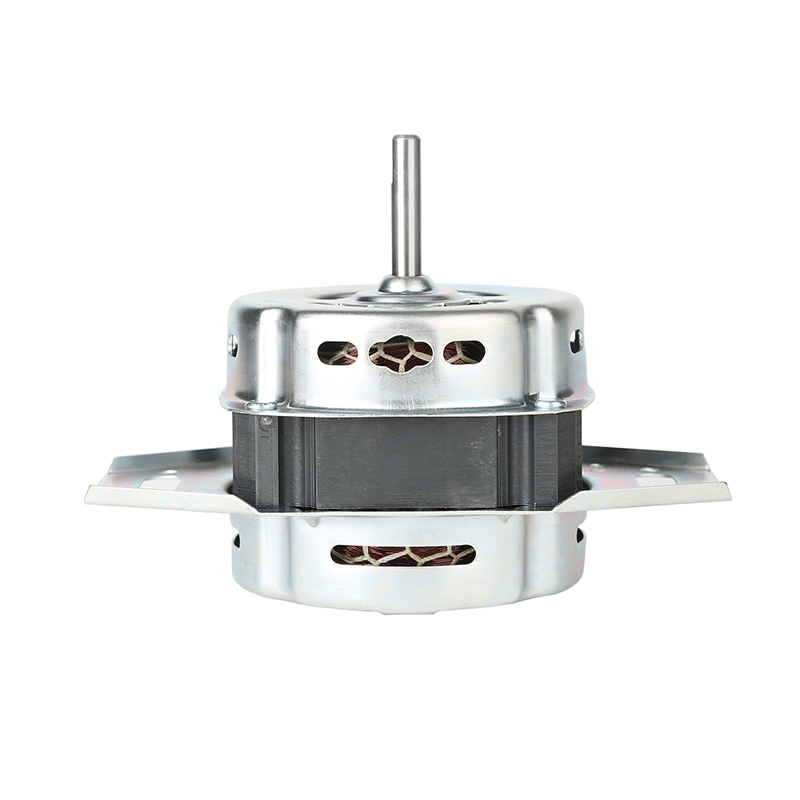
Manufacturers choose specific motor topologies based on production budgets, machine design, and target efficiency ratings. Understanding these types helps you predict lifespan and common failure points.
Universal motors operate on either AC or DC power. They use spring-loaded carbon brushes to deliver electrical current directly to the spinning armature (the commutator).
How it works: The brushes physically press against the rotating copper contacts. This maintains an electrical connection while the rotor spins at high speeds.
Evaluation: These motors are exceptionally cheap to manufacture and provide massive starting torque. However, they are inherently prone to mechanical wear. The carbon brushes gradually grind down over time. Furthermore, carbon dust accumulates inside the motor housing. This dust is highly conductive and can eventually cause secondary electrical shorts across the stator windings.
Premium appliances almost exclusively utilize BLDC or Inverter motors. They eliminate physical brushes entirely, relying strictly on electronic controls.
How it works: A BLDC motor uses a three-phase permanent magnet rotor. Instead of using brushes to switch the current mechanically, an external inverter board handles electronic commutation. The board fires current into specific stator coils in a precise sequence to drag the rotor forward.
Evaluation: These motors are highly efficient, whisper-quiet, and virtually frictionless. Mechanical wear is nearly non-existent. However, the primary failure risk shifts completely. Instead of replacing cheap carbon brushes, you now face the risk of a complex, highly expensive electronic control board failing due to power surges.
A typical top loading washing machine motor faces unique mechanical demands compared to front-loading units. It must drive a vertical agitator independently of the main wash basket. To achieve this, the motor interacts with a secondary clutch or transmission system, frequently called a splutch (spline-clutch).
During the wash cycle, the motor runs at low speeds and constantly reverses direction. The splutch mechanism isolates the main heavy basket, allowing only the central agitator to move. When the wash finishes, an electronic actuator shifts the splutch. This locks the agitator and the main basket together. The motor then shifts into a single-direction, high-speed continuous drive. This mechanical shift is essential for transitioning from the vertical washing stroke to the centrifugal water-extraction spin.
Feature | Universal (Brushed) Motor | BLDC / Inverter Motor |
|---|---|---|
Wear Components | Carbon brushes, Commutator | Bearings only |
Control Mechanism | Mechanical (Brushes/Triacs) | Electronic (Inverter Board) |
Efficiency & Noise | Moderate efficiency, noisy operation | High efficiency, ultra-quiet |
Common Failure | Worn brushes, carbon dust shorts | Control board failure, surge damage |
How the motor transfers its rotational energy to the wash drum drastically alters the machine's repairability and vibration tolerance.
In a traditional setup, the motor sits completely offset from the main drum assembly. It connects to the drum via a rubber drive belt looped around a large pulley.
Implementation Realities: The belt acts as an excellent mechanical fuse. If the wash drum seizes abruptly due to a jammed garment, the belt simply slips or snaps. It absorbs the shock load, protecting the motor shaft from snapping. Belts are exceptionally cheap and easy to replace. However, they suffer from inevitable wear. Over time, the rubber stretches, dries out, and slips. This slippage causes incomplete spin cycles and wet clothes.
Modern premium machines frequently abandon belts entirely in favor of Direct Drive systems.
Architecture: The motor mounts directly to the rear shaft of a front-loader or the bottom shaft of a top-loader. The rotor literally bolts straight onto the drum shaft.
Implementation Realities & Risk Assessment: Direct Drive eliminates transmission loss completely. It reduces the overall parts count by removing belts and pulleys, resulting in less mechanical vibration. However, the risk profile changes drastically. While the DD motor itself is highly durable, its placement is vulnerable. If the main tub bearing seal degrades, water leaks directly down the shaft. This water pours directly into the unprotected stator windings of the motor below, causing a catastrophic, high-cost electrical failure.
Motor failures are frequently misdiagnosed by amateurs and professionals alike. A machine that refuses to spin does not automatically mean the motor is dead.
You must differentiate true motor failure from peripheral mechanical or electrical failures. If the motor hums loudly but the drum will not spin, you likely have a seized water pump, a jammed garment in the tub, or a worn clutch assembly. The humming proves the MCU is sending voltage to the motor. If the motor is completely silent and unresponsive, the issue often lies upstream at the control board or door switch lock.
Confirming a dead motor requires isolated multimeter testing. Symptom observation is never enough.
Warning: Expertise & Safety
Before testing anything, you must physically unplug the appliance. Furthermore, you must safely discharge the motor run capacitors. Capacitors store lethal amounts of voltage long after the machine is unplugged. Use an insulated screwdriver to bridge the capacitor terminals safely.
Winding Tests: Set your multimeter to measure resistance (Ohms). Disconnect the motor wiring harness. Probe across the motor terminals. You are checking the internal copper windings. A healthy three-phase BLDC motor should show roughly equal resistance (usually between 5 to 15 Ohms) across all three phase combinations. If you read infinite resistance (OL), an internal wire has snapped, causing an open winding. If you read near-zero Ohms, the insulation melted, causing a dead short.
Ground Faults: Next, test for continuity between each motor terminal and the bare metal chassis of the motor housing. Your multimeter should show no continuity whatsoever. If you detect any continuity, the winding insulation has completely broken down. The motor is grounding out against its own frame and requires immediate replacement.
Sometimes the heavy windings are perfectly fine, but the machine still aborts cycles. Erratic spinning, violent shaking, or immediate cycle cancellations are frequently caused by a failed Hall sensor. If the tachometer misreports the RPMs to the control board, the board panics and shuts down the machine. Testing the sensor involves measuring DC voltage outputs while manually spinning the rotor slowly. A fluctuating voltage confirms the sensor is reading the magnets correctly.
When a failure is confirmed, you must navigate the complex economics of appliance repair.
You must evaluate the return on investment (ROI) for specific parts. If you diagnose a Universal motor with worn carbon brushes, you can usually buy replacement brushes for around $20. Sliding new brushes into the housing takes minutes and instantly revives the machine. Conversely, replacing the entire motor assembly might cost $150 to $300. Component-level repair is highly logical here. However, if a BLDC stator winding burns out, you cannot rewind the copper coils economically. You must replace the entire stator assembly.
Sourcing replacement parts presents another hazard. Technicians often debate using Original Equipment Manufacturer (OEM) parts versus cheaper aftermarket alternatives. Using non-OEM motors carries severe risks. An aftermarket motor might possess slightly incorrect winding resistance. Over time, drawing excessive current burns out the expensive motor control board. Additionally, mismatched mounting brackets on cheap motors cause microscopic misalignments. At 1200 RPMs, this misalignment generates severe vibration, eventually destroying the tub bearings.
Consumers and technicians need a logical framework to decide when a machine is beyond economical repair.
Failure Scenario | Required Action | Decision Recommendation |
|---|---|---|
Worn Carbon Brushes (Universal Motor) | Replace brushes ($20) + Labor | Save. High ROI, simple fix. |
Failed Hall Sensor (Tachometer) | Replace sensor ($15 - $40) + Labor | Save. Motor integrity remains intact. |
Direct Drive Stator burnt from water leak | Replace Stator, Tub Bearings, Main Seal ($250+ parts) + Teardown Labor | Scrap. The combined parts and labor usually exceed the appliance's replacement value. |
Inverter Board Failure (BLDC Motor) | Replace Control Board ($150 - $300) + Labor | Conditional. Save only if the machine is relatively new and under 5 years old. |
Mastering the internal mechanics of your appliance allows you to approach repairs logically rather than guessing blindly. Remember that electrical faults often masquerade as mechanical failures, and sensory loops control every phase of operation. Always isolate symptoms and utilize a multimeter to verify winding integrity before condemning hardware. By carefully evaluating drive architectures and strict repair matrices, you can confidently determine whether to invest in a simple sensor swap or source a completely new unit.
A: Yes, universal motors are highly sought after for DIY grinders or sanders. However, they require a dedicated speed controller, such as a triac module. Without the machine's MCU regulating the power, a bare universal motor will dangerously over-rev and potentially destroy itself.
A: Normal minor sparking indicates standard carbon brush operation inside Universal motors as current transfers to the commutator. However, excessive sparking accompanied by a burning smell indicates heavily worn brushes or a deeply damaged commutator. This requires immediate appliance maintenance.
A: The physical mechanical components, like the permanent magnets and stator, are designed to last 10 to 20 years. However, this lifespan is practically limited by the durability of the attached electronic inverter control board. The board remains highly vulnerable to neighborhood power surges and internal moisture.


