
 English
- All
- Product Name
- Product Keyword
- Product Model
- Product Summary
- Product Description
- Multi Field Search
English Views: 0 Author: Site Editor Publish Time: 2026-06-20 Origin: Site


Appliance manufacturing has experienced a massive shift in recent years. Brands are rapidly moving away from traditional belt-driven systems toward advanced direct drive technology. This evolution promises quieter laundry days and more reliable performance.
Buyers and distributors often face a significant premium price point for these modern machines. They struggle to separate clever marketing hype from actual mechanical reality. Many wonder if the extra investment truly translates into fewer breakdowns or better washing results.
Evaluating a washing machine motor requires looking beyond those flashy 10-year warranty badges. You must understand transmission efficiency, common failure points, and specific diagnostic realities. We will explore how these mechanisms work and help you determine if this upgrade suits your specific laundry needs.
Direct drive motors eliminate belts and pulleys, attaching directly to the wash drum for zero-loss power transmission.
They inherently produce less vibration and noise due to fewer moving mechanical parts.
While the motor itself is highly durable, repairs (when necessary) require complex electronic inverter board diagnostics, which can be costly.
Direct drive applies to both front-loading and top-loading configurations, though the torque management differs based on the drum axis.
Traditional appliances rely heavily on secondary mechanical linkages. They use a standard motor bolted to the bottom of the chassis. A rubber transmission belt connects this motor to a pulley on the wash drum. Engineers designed direct drive systems to eliminate these fragile intermediary components completely. By removing the transmission belt, pulley, and internal gearbox, manufacturers significantly reduced the machine's mechanical complexity.
At the core of this technology sits a Brushless DC (BLDC) motor. It consists of two primary components. The stator features a series of copper electromagnetic coils. The rotor contains powerful permanent magnets. Instead of sitting off to the side, this assembly attaches directly to the center of the wash drum. For front-loaders, it mounts on the back. For top-loaders, it sits underneath. This configuration ensures the drum and rotor spin as one unified piece.
An electronic inverter control mechanism manages the entire operation. Older systems relied on physical gears to change speeds. The inverter board replaces these gears completely. It calculates the exact amount of electrical current needed at any given millisecond. The board pulses electricity through the stator coils to create shifting magnetic fields. These fields push and pull the rotor magnets dynamically. This allows the system to change drum speed and torque instantly.
This direct connection drastically improves energy transfer efficiency. Belt systems suffer from constant kinetic energy loss. Friction generated by the rubber belt sliding against pulleys wastes valuable power. We see almost zero energy loss here. The magnetic fields apply rotational force directly to the load.
The control board receives a speed command from the main computer.
The inverter converts standard household AC power into precise DC pulses.
Electromagnetic coils energize in a specific sequence to attract the rotor magnets.
The drum turns instantly alongside the rotor without any mechanical delay.
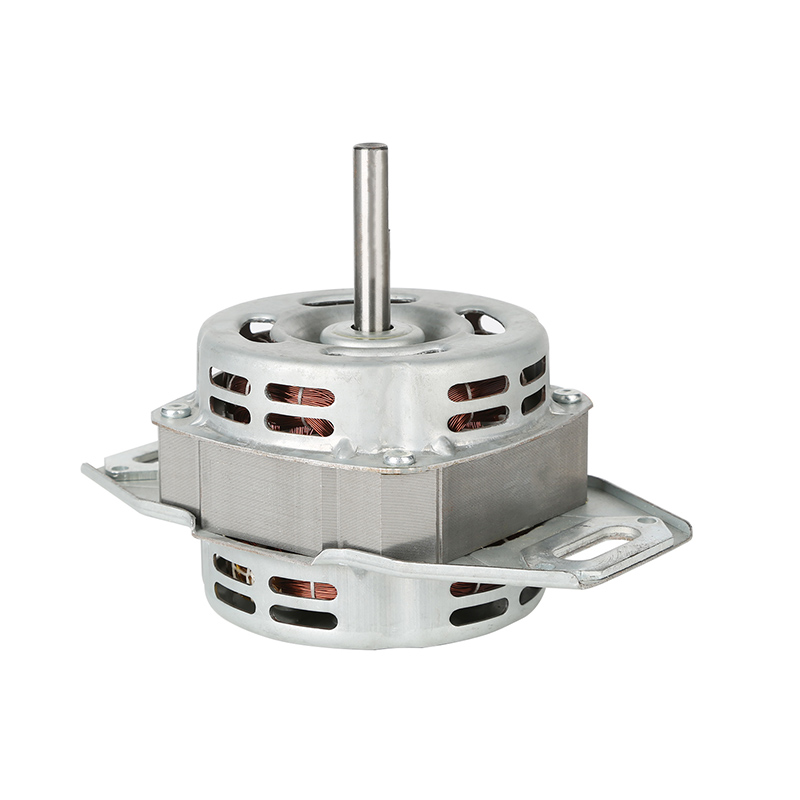
Consumers often struggle to quantify the real-world differences between motor types. We must look at measurable acoustic profiles, physical degradation timelines, and energy consumption metrics.
Acoustic performance presents the most immediate difference. Belt-driven machines often exceed 70 decibels (dB) during a high-speed spin cycle. You will frequently hear a rhythmic "slapping" sound. This occurs because the rubber belt stretches slightly under high RPMs. Direct drive units typically operate around 50 to 55 dB. The stabilized direct torque prevents speed fluctuations. The lack of rubber components removes high-frequency whining noises entirely.
Physical wear and tear timelines also diverge sharply. Rubber belts degrade predictably. Ambient heat inside the cabinet dries out the rubber compounds. Over a few years, they stretch, crack, and eventually snap. Magnetic direct drives maintain constant structural integrity. Because the magnets never physically touch the stator coils, friction-based wear drops to near zero.
Energy consumption heavily favors modern direct configurations. Fixed-output belt motors often draw maximum current even for small loads. Variable speed control in direct systems reduces wasted electricity. The inverter only supplies the exact wattage required to move the current fabric weight. This precision scaling lowers overall utility draw.
Certain operational environments make the direct drive upgrade strictly necessary. Consider the following scenarios:
Second-floor laundry rooms: The reduced acoustic profile prevents noise from echoing through the floorboards.
Heavy-duty commercial use: The absence of snapping belts prevents unexpected daily downtime in laundromats.
Open-concept homes: Quiet operation allows you to run cycles while watching television nearby.
Feature | Belt Drive System | Direct Drive System |
|---|---|---|
Power Transmission | Indirect (via rubber belt) | Directly coupled to drum |
Noise Level (Spin Cycle) | High (65 - 75+ dB) | Low (50 - 55 dB) |
Part Degradation | Belts stretch and snap frequently | Magnets and coils rarely degrade |
Energy Efficiency | Moderate (friction losses) | High (zero friction loss) |
Upgrading to this technology requires a higher initial cash outlay. You should frame this upfront premium as a long-term hardware investment. The benefits extend far beyond simple longevity.
One major verified benefit involves physical space optimization. Removing the bulky pulley wheel and transmission belt creates extra internal cabinet space. Manufacturers utilize this newly freed clearance to install larger wash drums. You effectively gain more washing capacity within the exact same exterior footprint. This allows you to wash king-sized comforters easily.
Precise drum movement represents another significant advantage. Belt drives jerk the drum forward abruptly. Magnetic stators allow for incredibly delicate fabric wash cycles. The drum can rock back and forth gently. It can also pause instantly. This precision protects expensive garments from aggressive stretching.
You must remain aware of industry realities regarding warranties. Brands heavily advertise "10-Year Motor Warranties." This creates a false sense of absolute security. The physical metal motor rarely fails. However, the delicate electronic inverter control board driving it remains highly susceptible to voltage spikes. A nearby lightning strike or grid fluctuation can fry the board instantly. Replacing this proprietary board often costs more than buying a new appliance.
Weight distribution presents another engineering challenge. Direct drive units are quite heavy. Attaching this massive metal component directly to the drum places immense stress on the central drum bearing. Engineers must install robust suspension systems to compensate. If you overload the machine consistently, this rear bearing will fail prematurely.
Install a high-quality surge protector at the wall outlet to shield the inverter board.
Never exceed the manufacturer's recommended dry weight capacity.
Ensure the machine sits perfectly level on the floor to reduce bearing stress.
Engineers adapt direct drive mechanics differently depending on the appliance layout. Front-loaders use a horizontal axis. Top-loaders operate on a vertical axis. Integrating a direct connection into a vertical-axis drum requires managing unique physical forces.
A top loading washing machine motor faces distinct downward pressure. Gravity pulls the entire weight of the water, wet clothes, and heavy steel drum directly down onto the motor shaft. The thrust bearing must support hundreds of pounds continuously. This differs vastly from a front-loader where weight hangs horizontally.
The torque requirements also change drastically. Top-loaders usually feature a central agitator or a bottom impeller. The motor must rapidly reverse direction every few seconds to create the necessary water currents. A magnetic drive excels here. It handles rapid bidirectional switching without the harsh mechanical clanking found in older geared transmissions. This instant reversing capability improves stain removal efficiency.
Performance metrics improve significantly regarding load balancing. Older top-loaders famously suffered from the "walking machine" phenomenon. If heavy towels bunched up on one side, the spinning drum would violently shake the entire cabinet across the room. Modern systems use the motor to sense off-balance loads. The control board detects slight variations in rotational resistance. It will automatically stop the cycle, add more water, and gently agitate the clothes to redistribute the weight.
Repairing modern laundry appliances looks vastly different today than it did twenty years ago. The shift away from mechanical parts changes everything about diagnostic procedures. In the past, a technician could fix a non-spinning drum by simply swapping a broken $20 rubber belt. Today, technicians must perform specialized electronic diagnostics.
Mechanics now hook up multimeters and digital diagnostic tools to the appliance. They must read fault codes from the central computer. If the drum refuses to turn, the technician must determine if the issue lies in the stator coils, the wiring harness, or the main logic board. This requires specialized training and takes more time.
You should understand the common failure points. The motor itself lacks carbon brushes. Brushless designs eliminate the most common cause of motor death. However, the system relies heavily on Hall Effect sensors. These small electronic position sensors tell the computer exactly where the rotor sits at any given moment. Water intrusion or extreme vibrations can easily break these sensors. When a Hall sensor fails, the drum will twitch erratically instead of spinning smoothly.
The central tub bearing also bears the brunt of the load. Because the heavy metal rotor hangs directly on the drum shaft, the bearing endures immense lateral stress. If water seals fail, moisture leaks directly into the bearing. This causes loud roaring noises during the spin cycle.
When assessing long-term repair budgets, you face a unique balance. You will likely experience fewer service calls over a ten-year period. The absence of stretching belts and grinding gears ensures reliable daily operation. However, you face potentially higher parts costs per individual repair. Replacing a fried inverter board or a crushed tub bearing demands significant labor and expensive proprietary components.
Target the Right Buyer Profile: This technology perfectly suits homeowners who prioritize ultra-quiet operation, demand precise fabric care for delicate items, and are willing to invest a higher upfront premium for long-term stability.
Protect Your Investment: Always use dedicated surge protection for your appliance. The electronic control boards driving these motors are sensitive to grid fluctuations.
Balance Your Loads: Prevent premature bearing failure by washing evenly distributed loads. Avoid washing a single heavy blanket alone.
Next Steps: Before finalizing your appliance selection, carefully read the fine print on the warranty. Ensure you understand exactly what coverage applies to the electronic control board versus the physical metal stator.
A: This question relies on category confusion. Direct drive refers to the physical mechanical connection between the motor and the drum. Inverter refers to the electronic electrical control system managing the power. Almost all modern direct drive appliances actually use inverter technology to function. They are not competing features; they work together.
A: Yes, individual repairs typically cost more. Traditional machines required frequent, low-cost belt replacements. Modern magnetic systems fail less often but require expensive proprietary electronic parts when they do. Replacing a failed main control board or a damaged Hall sensor costs significantly more than a simple rubber belt.
A: No. While it eliminates the vibration caused by a slapping belt, poor leveling and overloading will still cause heavy vibration. The physics of wet, spinning fabric remain the same regardless of the motor type. Proper floor stabilization remains essential.


