
 English
- All
- Product Name
- Product Keyword
- Product Model
- Product Summary
- Product Description
- Multi Field Search
English Views: 0 Author: Site Editor Publish Time: 2026-06-19 Origin: Site


A washing machine refusing to agitate or spin disrupts household operations immediately. Jumping straight to replacing the entire appliance is often an expensive overreaction. Homeowners frequently panic when they face a laundry room flooded with wet clothes. The root cause is frequently electrical in nature. Yet, a completely dead power system often mimics much cheaper and simpler failures. Broken drive belts, worn splines, or failed lid switches display remarkably similar symptoms. Misdiagnosing these components leads to wasted money and deep frustration.
This guide provides a definitive and safe diagnostic process. You will learn to properly isolate electrical failures from other mechanical parts. Using clear steps, you can gather accurate data directly from your machine. Ultimately, this allows you to make an evidence-based decision on whether to repair the current unit or buy a replacement. Let us dive into the diagnostic steps.
Safety Absolute: Testing requires interacting with high-voltage appliances; unplugging the unit and discharging the motor capacitor is non-negotiable.
Tool Requirement: A digital multimeter is mandatory for accurate diagnostic testing; visual inspections are insufficient for electrical faults.
Symptom Isolation: A humming noise without movement usually indicates a motor or capacitor issue, while complete silence often points to a control board or switch failure.
Financial Threshold: If a replacement motor exceeds 50% of the cost of a new washer—and the machine is over 7 years old—appliance replacement is generally the more cost-effective route.
Many appliance failures trick owners into suspecting a dead drive system. You must rule out cheaper mechanical parts before opening the cabinet. This initial phase saves both time and unnecessary testing.
Start your diagnosis by checking the easiest components. First, verify the drive belt remains intact. A snapped belt allows the drive shaft to spin without moving the drum. Next, test the lid switch or door lock. Modern machines use these safety switches to prevent accidents. If a switch fails, the main board halts the cycle entirely. Finally, reach into the tub and spin it by hand. It should move freely. If it feels locked solidly in place, your drum bearings likely seized. A seized bearing prevents any internal rotation.
You can often identify specific failures simply by observing the machine's behavior during a cycle. Look and listen for these four primary indicators:
Audible Humming: You hear a low buzz when the cycle starts. The system receives power but lacks the torque to turn. This usually means a bad capacitor or a burned winding.
Tripping Breakers: The machine causes an immediate power loss upon starting a cycle. This indicates a dead short within the internal wiring.
Thermal Cutout: The cycle runs briefly and then shuts down completely. It magically restarts after cooling for thirty minutes. This highlights severe overheating issues.
Burning Odor: You smell ozone or burning varnish near the machine. This distinct odor points directly to melted internal winding insulation.
Observed Symptom | Likely Cause | Recommended First Action |
|---|---|---|
Humming but no spinning | Start capacitor or main winding | Test capacitor before the motor. |
Complete silence on start | Lid switch or control board | Test the door lock continuity. |
Immediate breaker trip | Short to ground in wiring | Perform ground fault check. |
Acrid burning smell | Melted copper insulation | Visual inspection of casing. |
Working with major home appliances poses severe electrical risks. You must prioritize safety protocols before removing any panels. Treating high-voltage equipment carelessly can lead to fatal shocks.
Your absolute first step is disconnecting the appliance from wall power. Unplug the main cord completely. Do not simply rely on turning the machine off at the console. Next, you must locate the run capacitor. This small cylindrical part helps start the rotation. You must safely discharge it using an insulated screwdriver. Capacitors store lethal electrical charges internally. They remain dangerous even when the machine is unplugged.
Best Practice: Wear rubber-soled shoes while working on wet floors. Keep the work area completely dry before touching any internal electronics.
Gather the right tools before you begin the teardown. You cannot guess your way through electrical diagnostics.
Digital Multimeter: You need a device capable of reading Ohms (Resistance). Auto-ranging models work best for beginners.
Screwdriver and Nut Driver Set: Most cabinets use standard 1/4-inch or 5/16-inch hex screws. Keep a Phillips head screwdriver handy.
Personal Protective Equipment: Wear leather work gloves to protect against sharp metal edges. Use a bright headlamp to illuminate dark cabinet interiors.
Wiring Schematic: Find the factory wiring diagram. Manufacturers usually hide this paper document inside the control console or behind the lower front panel.
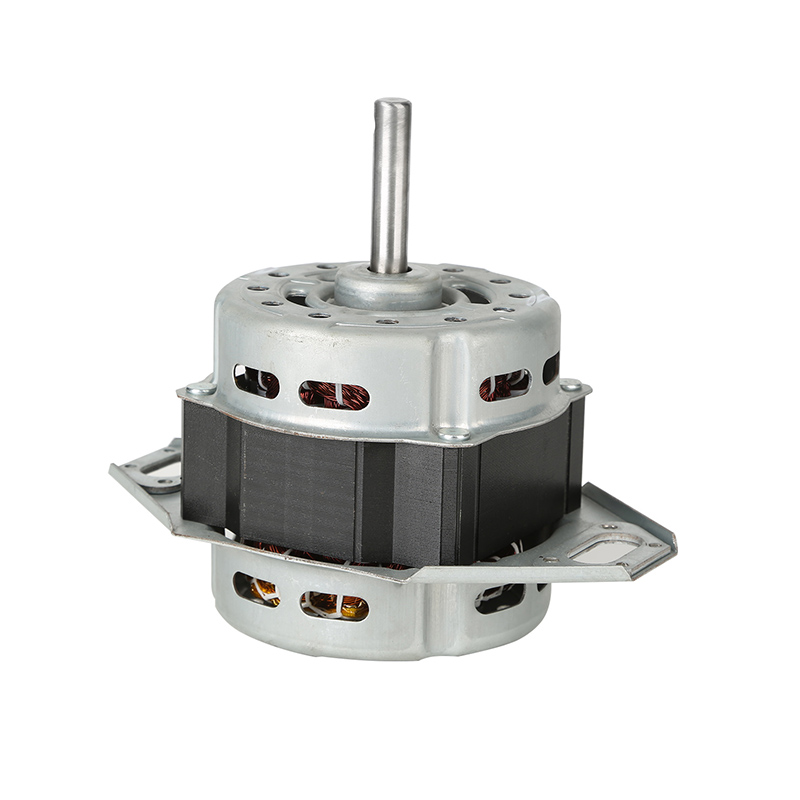
You have secured the area and gathered your tools. Now you must expose the internal mechanics. Appliance designs vary heavily between manufacturers, so approach your specific model methodically.
Front-loading machines typically place the drive system at the bottom rear. You can usually access it by removing the rear metal access panel. Remove the perimeter screws and lift the sheet metal away. Conversely, accessing a top loading washing machine motor typically requires unclipping the front panel. Sometimes you must lean the machine back against a wall to access the bottom chassis directly. Secure the machine carefully if you tilt it.
Start with your eyes and hands. Look closely at the metal housing. Check for black scorch marks or melted wire harnesses. Look for rust trails or water damage from leaking tubs directly above the unit. Water destroys electronics rapidly. Next, grab the central drive shaft. Spin it manually. It should offer smooth, even resistance. If you feel grinding or hear scraping noises, the internal bearings are shattered.
This step determines the health of the internal copper coils. Set your digital multimeter to the lowest Ohms (Rx1) setting. Touch the probes together to ensure they read zero. Disconnect the main wiring harness from the housing. You must isolate the component from the main board.
Probe the specific terminals for the start and run windings. You must refer to your machine's schematic to map the exact pins. Place one probe on the common terminal and the other on the start terminal. Then check the run terminal.
Evaluation standard: Healthy copper windings generally read between 1 and 10 Ohms. The exact number depends on the manufacturer. However, if your screen displays "OL" (Open Line) or an infinite reading, the winding is physically broken. You cannot repair a broken internal wire easily.
A ground fault occurs when protective insulation melts away. The live copper wire touches the outer metal frame. Keep your multimeter on the Ohms setting for this test. Place one probe directly on the bare metal casing. Scratch away a tiny bit of paint if necessary to ensure a solid connection.
Place the second probe on each electrical terminal successively. Check every single pin in the connector block.
Evaluation standard: You should see an "OL" reading for every pin. This indicates no connection between the wires and the casing. Any reading other than "OL" indicates a dead short to ground. The component is highly unsafe. It will trip your breakers constantly and must be replaced immediately.
Common Mistake: Leaving your fingers on the metal probe tips while testing resistance. Your body has natural electrical resistance. Touching the probes alters the readings and creates false data.
You have completed the diagnostic sequence. Now you must interpret the data logically. You hold the numbers needed to make a smart financial decision.
If your tests reveal a failed continuity check or a short to ground, the unit is definitively dead. You cannot safely rebuild modern appliance drive systems at home. If the component passes all visual, continuity, and ground tests, it is likely fine. You should redirect your troubleshooting efforts. The actual failure is probably the main control board, the mechanical timer, or a broken wire buried deep in the harness.
Deciding between buying parts or replacing the entire appliance requires simple math. You must weigh current performance against future longevity.
When to buy a new washing machine motor: Proceed with the repair if the machine is less than 5 years old. The appliance should be in otherwise excellent condition. An OEM replacement part usually costs under $150. This represents a solid investment in a reliable machine.
When to replace the whole washer: Cut your losses if the machine is 8 or more years old. Avoid repairs if the required part costs over $200. You should also replace the appliance if it has a history of other cascading failures. For instance, if you hear noisy spin bearings during extraction, replacing the drive system wastes money. The bearing failure will soon destroy the machine anyway.
Never guess when ordering replacement electronics. Always match the exact part number stamped directly on the old metal casing. Do not simply rely on the washing machine model number found under the lid. Manufacturers change vendors mid-production. Using the casing number ensures exact phase, voltage, and wattage compatibility. It guarantees the mounting brackets will align perfectly.
Testing a washing machine motor eliminates the stressful guesswork of appliance repair. Following this structured method prevents you from simply throwing "parts darts" at an unknown problem.
Always prioritize safety by unplugging the unit and discharging high-voltage capacitors.
Use a digital multimeter to check for exact winding continuity and dangerous ground faults.
Establish a definitive baseline of data before spending any money on replacement parts.
Weigh the final replacement cost against the overall age and lifespan of your laundry unit.
If your diagnostic points to a failed unit, order the exact OEM part and restore your laundry room to full operation.
A: No. Visual inspections can catch obvious catastrophic failures like burn marks or melted wires. However, an internal electrical short or an open winding remains invisible to the naked eye. These faults can only be verified safely and accurately using a digital multimeter.
A: A humming motor is receiving active voltage but lacks the power to rotate. This is most commonly caused by a failed start capacitor. It can also stem from a seized drum bearing physically locking the system, or a burned-out start winding deep inside the housing.
A: It depends heavily on the unit's age and overall cost. A $150 replacement part is a smart investment for a 4-year-old machine. Conversely, a $250 part is a poor investment for a 10-year-old machine currently suffering from worn suspension rods and failing bearings.


