
 English
- All
- Product Name
- Product Keyword
- Product Model
- Product Summary
- Product Description
- Multi Field Search
English Views: 0 Author: Site Editor Publish Time: 2026-06-18 Origin: Site


Choosing a new appliance often leaves buyers stuck at a confusing crossroads. You must decide between traditional belt-driven appliances and heavily marketed "direct drive" models. Appliance aisles are full of technical jargon. Consumers need to cut through these marketing buzzwords. You must understand if the premium price translates to actual longevity and quieter operation.
This guide offers a technical but highly accessible breakdown. We will explore how direct drive technology completely changes the mechanical architecture inside your appliance. You will learn about the real-world repair risks and the hidden durability factors. Finally, we provide a clear framework to help you decide if this system fits your specific household needs perfectly. You can expect evidence-based insights rather than empty sales pitches.
Direct Attachment: A direct drive system eliminates belts and pulleys, attaching the motor directly to the center of the wash drum to reduce mechanical friction.
Durability vs. Repair Cost: While fewer moving parts mean fewer standard mechanical failures (like snapped belts), electronic control board or direct motor failures can be significantly more expensive to repair.
Efficiency Gains: Direct drive setups typically offer superior energy efficiency, higher spin speeds, and precise torque control compared to traditional systems.
Top-Load Implications: Upgrading a top loading washing machine motor to direct drive fundamentally changes agitation patterns, often replacing tall center agitators with high-efficiency impellers.
Traditional belt-driven systems rely on a complex series of moving parts. They transfer power from the motor to the wash drum using rubber belts and tension pulleys. This traditional design faces a major physical problem. These systems lose valuable kinetic energy through basic mechanical friction. Over time, the rubber belts stretch out. They slip during heavy loads. Eventually, they snap completely under stress. Every time a belt slips, your appliance wastes energy and creates excess heat.
The direct drive architecture solves this problem by simplifying the entire mechanical chain. Manufacturers completely remove the traditional transmission, the bulky gearbox, and the rubber belt drive. Instead, they mount a highly advanced washing machine motor directly to the center of the drum shaft. This creates a one-to-one energy transfer system.
This modern architecture relies on two primary components:
The Stator: This is a stationary ring of electromagnetic coils attached securely to the back of the washer tub. It does not move. Instead, it generates a highly controlled magnetic field when electricity passes through it.
The Rotor: This is a metal bowl lined with powerful permanent magnets. It covers the stator and attaches directly to the drum shaft. As the stator's magnetic field changes, it violently attracts and repels the rotor magnets. This magnetic force spins the wash drum.
This design introduces a massive leap in electromagnetic torque control. The elimination of mechanical intermediaries allows the machine's onboard computer to dictate exact movements. The computer dynamically adjusts drum actions based on the specific load weight. It can rock the drum gently for delicates. It can tumble heavy towels forcefully. It can spin at extreme velocities to extract maximum water. The motor responds to electrical signals instantly. There is no lag time waiting for a rubber belt to catch.
Best Practice: Always level your washer perfectly during installation. Direct drive systems are highly sensitive to imbalance. Uneven floors cause the magnetic gap between the stator and rotor to fluctuate, reducing mechanical efficiency over time.
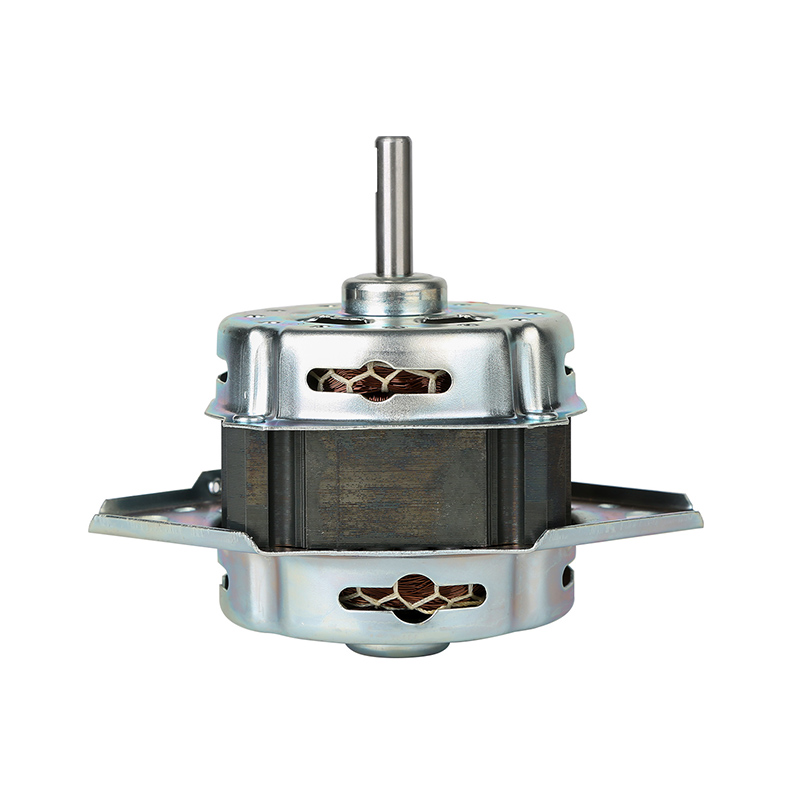
Manufacturers aggressively market direct drive models for several legitimate reasons. The most immediately noticeable benefit is vibration and noise reduction. Traditional washers generate a lot of ambient noise. You hear slapping belts, grinding gearboxes, and squeaking pulleys. Direct drive eliminates these friction points. You get a remarkably quiet wash cycle. This makes direct drive units ideal for second-floor installations or open-concept living spaces.
Energy and space efficiency represent another massive upgrade. Direct energy transfer prevents power loss. The motor yields much higher spin speeds. Faster spinning extracts significantly more water from heavy fabrics. This drastically lowers your subsequent drying times. Furthermore, removing the bulky transmission gearbox frees up internal cabinet space. Manufacturers use this extra room to install larger wash drums while keeping the exterior footprint exactly the same.
Finally, you experience extended lifespans for standard moving parts. You simply remove the most common wear-and-tear items from the equation. You never have to worry about replacing a stretched or snapped belt again.
Despite the heavily marketed benefits, we must look at this technology through a skeptical lens. The primary drawback revolves around the "single point of failure" reality. Traditional setups are cheap to maintain. If a $20 rubber belt snaps, it requires a fast, cheap DIY fix. Almost anyone can slide a new belt onto a pulley.
Direct drive systems change this dynamic entirely. If a direct drive stator cracks, or if the precise electronic motor control board (ECB) shorts out, the repair becomes a major ordeal. Specialized technicians must run diagnostic tests using sensitive multimeters. They must isolate the exact electrical fault. The resulting repair bill for a new control board can easily rival the cost of an entirely new appliance.
We also have to consider bearing wear realities. In a traditional setup, the belt absorbs a lot of the shock during unbalanced loads. In a direct drive system, the motor transfers the entire weight of heavy, wet loads directly onto the main tub bearings. There is no shock absorber.
Common Mistake: Homeowners often cram too many heavy blankets into direct drive washers. If you overload the machine consistently, these central bearings will fail prematurely. Bearing replacement requires tearing the entire machine apart. This causes catastrophic and deeply expensive damage.
The application of direct drive technology varies drastically depending on the orientation of your appliance.
In the front-load market, direct drive is now the undisputed industry standard for premium models. Front-loaders operate on a horizontal axis. They rely on gravity to tumble clothes through a shallow pool of water. To dry clothes effectively, front-loaders must achieve extreme horizontal spin speeds. Direct drive motors handle these high-speed, horizontal axis spins flawlessly. They maintain perfect balance and deliver massive torque without the risk of a belt slipping off a high-speed pulley.
However, the introduction of a direct drive top loading washing machine motor completely changed the traditional laundry category. For decades, top-loaders relied on tall central agitators powered by heavy transmissions. These agitators grab clothes and mechanically grind them back and forth. It is an aggressive, friction-heavy process.
Modern direct drive top-loaders replace these tall agitators with high-efficiency impellers. An impeller sits flat at the bottom of the wash drum. Instead of grinding clothes mechanically, the direct drive motor uses independent, high-speed rotational pulses. It shoots jets of water upward. The water itself does the cleaning. The clothes circulate gently in a complex, multi-directional pattern.
You must note a crucial detail regarding wash performance here. Direct drive top-loaders rely heavily on precise load balancing. Because they use less water and lack a central agitator post, clothes can easily bunch up on one side. Unbalanced loads cause the computer to panic. The machine will trigger repeated, frustrating auto-refill cycles. It fills the tub with extra water attempting to float the clothes and redistribute the weight. This wastes massive amounts of water and extends your wash time significantly.
Feature | Traditional Top-Load (Belt/Agitator) | Direct Drive Top-Load (Impeller) |
|---|---|---|
Agitation Style | Tall central post grinds clothes. | Flat bottom disc pulses water jets. |
Fabric Wear | High friction, rougher on delicates. | Gentle circulation, less fabric wear. |
Water Usage | Deep water fill required. | Low water usage (unless unbalanced). |
Repair Difficulty | Easy. Universal belts and cheap parts. | Hard. Requires electronic diagnostics. |
Before you make a final decision, we must clarify a very common point of confusion. Many buyers confuse "Inverter" with "Direct Drive." An inverter refers to the electrical power delivery method. An inverter changes the frequency of the electrical current reaching the motor, allowing it to run at variable speeds instead of just "on" or "off." This power management technology can be applied to both belt drive and direct drive systems. Therefore, you can easily buy an "Inverter Belt Drive" machine. Do not let salespeople confuse electrical efficiency with mechanical architecture.
Here is a clear shortlisting logic chart to help you finalize your decision.
Decision Criterion | Winner | Reasoning |
|---|---|---|
Acoustic Dampening | Direct Drive | No belt slapping or gear grinding. |
Upfront Budget | Belt Drive | Older technology costs significantly less to manufacture. |
Rural Serviceability | Belt Drive | Any independent technician can swap a universal belt. |
Large Capacity | Direct Drive | Removing the gearbox frees up internal drum space. |
You are installing the washer near living areas or bedrooms where acoustic dampening is a primary success criterion.
You frequently wash heavily soiled, bulky items that require high-torque, precise drum movements for thorough cleaning.
You plan to keep the machine for seven or more years and are perfectly willing to invest in a premium extended warranty.
You want to maximize internal tub capacity without buying a physically wider machine.
Your upfront budget is your primary constraint, and you need a reliable machine quickly.
You live in a rural area with limited access to specialized appliance technicians. Belt-drives are universally easier and cheaper for independent repairmen to service.
You prefer a traditional deep-water wash experience and feel more comfortable with familiar mechanical systems.
You frequently wash heavily unbalanced items like singular dog beds, which confuse modern computerized load sensors.
Direct drive motors represent a genuine mechanical upgrade over traditional belt systems. They offer undeniable, tangible benefits in terms of noise reduction, interior capacity, and energy efficiency. By removing physical friction points, engineers have created a smoother, faster, and smarter washing machine architecture.
However, you must factor in the long-term repair landscape before purchasing. This advanced technology successfully reduces the frequency of minor, annoying breakdowns like snapped belts. Conversely, it significantly increases the severity and cost of major breakdowns. If the electronic brain or the internal stator fails, you will face a steep repair bill. We strongly advise pairing any direct drive purchase with a robust manufacturer warranty that specifically covers the motor and the electronic control board for at least ten years. Make your choice based on your tolerance for repair risks versus your desire for premium daily performance.
A: No. They are significantly quieter because they eliminate belt whine and gear grinding. However, you will still hear the physical water sloshing, the drain pump activating, and a high-speed bearing hum during the final spin cycle.
A: No. Inverter dictates how electrical power is managed for energy efficiency. Direct Drive dictates how the motor physically connects to the wash drum. You can have an appliance that features an "Inverter Direct Drive" system, combining both technologies.
A: Mechanically, the stator and rotor are quite easy to access by removing the rear panel. However, diagnosing the complex electronic sensors and control boards that run them requires specialized multimeter testing and advanced technical expertise.


