
 English
- All
- Product Name
- Product Keyword
- Product Model
- Product Summary
- Product Description
- Multi Field Search
English Views: 0 Author: Site Editor Publish Time: 2026-08-24 Origin: Site


Designing a reliable laundry appliance requires precise mechanical engineering and strategic component selection. Manufacturers often face a difficult dilemma during the prototyping phase. Over-specifying motor parameters inflates production costs needlessly. Conversely, under-specifying these same parameters causes premature failures when the appliance handles heavy, wet loads. Appliance OEMs, commercial laundry operators, and repair facilities must get this engineering balance exactly right. Selecting the right propulsion system remains a critical decision that directly impacts appliance longevity and user satisfaction. If you fail to optimize this core component, you risk increased warranty claims and damaged brand reputation.
Buyers must actively shift their focus away from raw horsepower figures. Instead, you need to evaluate application-specific torque-speed characteristics and analyze drive-system efficiency. This guide reveals how torque and mechanical power interact during complex wash cycles. We will explore how different drive mechanisms alter output. You will also learn how to source the correct hardware for your specific appliance architecture.
Engineers must first establish a clear technical baseline when designing laundry appliances. We measure mechanical power in Watts or Horsepower (HP). This power metric dictates the sustained agitation and high-speed spinning capabilities of the machine. However, torque represents a entirely different force. We measure torque in Newton-meters (Nm). Torque provides the raw rotational force necessary to overcome initial static friction.
Textiles absorb massive amounts of water during a wash cycle. This saturation exponentially increases the dead weight inside the drum. You must overcome tremendous inertia to initiate movement. By analyzing standard industry torque-speed curves, a crucial engineering truth emerges. High starting torque is absolutely non-negotiable. If initial torque delivery is too low, the wet drum simply stalls. Stalling creates immense electrical strain across the circuitry. This strain quickly leads to blown start capacitors or melted stator windings.
We must dispel the pervasive "High HP" myth in the appliance industry. Many procurement teams assume a higher HP rating guarantees superior wash performance. This assumption is fundamentally flawed. Horsepower only measures work capacity over time. It does not measure initial rotational force. A poorly geared 3/4 HP drive system can easily underperform. Conversely, a well-calibrated 1/2 HP setup delivers perfect, reliable wash cycles. You optimize appliance performance by matching specific torque curves to load requirements, rather than maximizing raw horsepower figures.
Mechanical transmission design dictates how an appliance utilizes available power. Drive systems fundamentally alter how rotational energy reaches the wash drum. You must evaluate the entire drive train to understand actual performance.
Consider modern direct drive (DD) systems. These architectures utilize a strict 1:1 mechanical transmission ratio. The rotor connects directly to the back of the drum shaft. DD setups inherently require high-torque, low-speed motor designs. Brushless DC (BLDC) units excel in these applications. They provide massive torque output even at zero RPM. You lose no power to belt friction. However, this design carries a notable trade-off. The stator and rotor must be highly robust. They must absorb dynamic shock loads directly from off-balance wet laundry.
Now evaluate traditional belt and pulley configurations. These systems utilize transmission ratios to alter performance. A smaller pulley on the drive shaft connects to a larger pulley on the drum. This mechanical configuration multiplies torque significantly. It simultaneously reduces the final rotational speed of the drum. This gearing allows manufacturers to utilize smaller, faster, and cheaper motors.
However, pulley systems introduce inevitable mechanical power loss. Drive belts stretch over time. Pulleys wear down gradually. Mechanical friction generates excess heat. Belt slippage prevents maximum power from reaching the drum. When you specify a washing machine motor for a belt-driven chassis, you must calculate these losses carefully. You must uprate the hardware specification slightly to compensate for friction and slippage over the lifespan of the appliance.
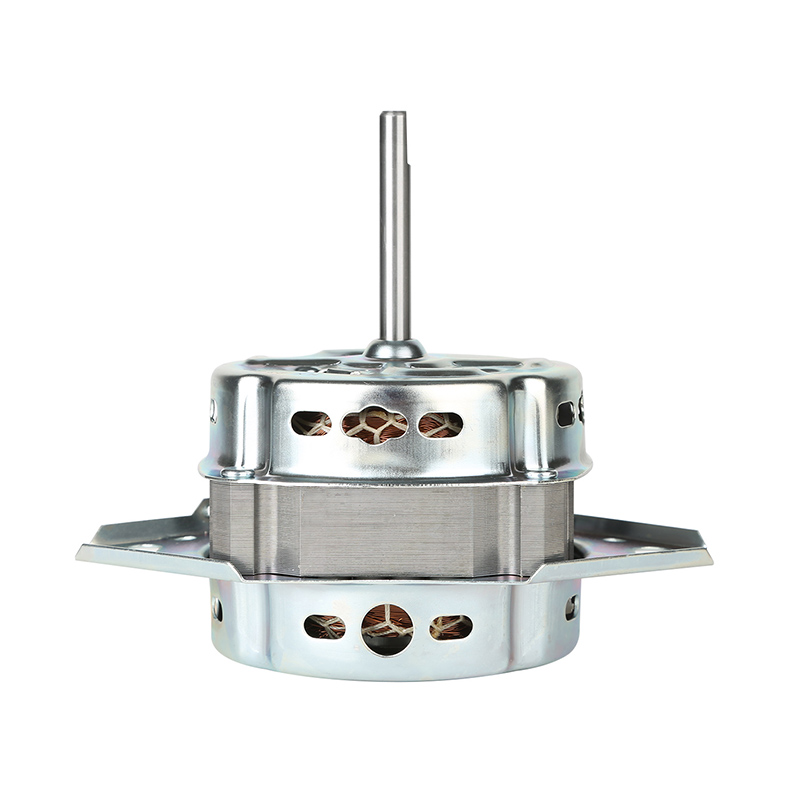
Load profiles vary drastically between different appliance architectures. Distinct mechanical designs require entirely different torque delivery methods. You cannot use a one-size-fits-all approach for appliance propulsion.
Top-loading agitators demand aggressive, pulsing torque profiles. The central agitator shifts directions constantly to clean textiles. This rapid reversal creates massive electrical spikes and intense mechanical stress. Front-loading drums operate on a completely different physical principle. They require sustained tumbling action to drop clothes through the water. They also require incredibly high-speed spin cycles for moisture extraction. Their continuous torque requirements remain relatively stable once initial inertia is overcome.
Table 1: Load Profile Comparison for Wash Configurations
| Appliance Architecture | Primary Wash Action | Starting Torque Requirement | Operating Speed Requirement |
|---|---|---|---|
| Top-Loading Agitator | Pulsing / Rapid Reversal | Extremely High (Spiking) | Low to Moderate (Agitation) |
| Front-Loading Drum | Continuous Tumble | High (Initial Overcome) | Very High (Extraction Spin) |
| Commercial Extractor | Heavy Tumble | Maximum (Heavy Loads) | Extreme (Fast Cycle Turnaround) |
Regulatory compliance dictates firm design limits for appliance manufacturers. Drive efficiency directly impacts the overall energy rating of the machine. Regulatory bodies worldwide mandate strict minimum efficiency standards. An inefficient unit wastes electrical energy by generating excess heat. This heat does not contribute to mechanical rotation. Poor efficiency ruins your appliance's energy classification and discourages eco-conscious buyers.
Acoustic and vibration metrics serve as vital evaluation criteria. Consumers strongly dislike noisy appliances. However, excessive noise signifies a deeper mechanical problem. Severe vibration points to dangerous mechanical stress. It usually indicates poor rotor balance or inferior bearing quality. You must evaluate vibration metrics meticulously during the prototyping phase. Smooth, quiet operation ensures component longevity and guarantees consumer satisfaction.
Strategic sourcing requires rigorous vendor evaluation. You cannot rely on basic specification sheets alone. Procurement teams must dig deeper into manufacturing quality and testing protocols.
Establish strict baseline vendor requirements immediately. First, check for valid ISO quality manufacturing certifications. Next, verify the specific thermal class ratings of the copper or aluminum windings. Look for at least Class F insulation to ensure safety. Finally, assess the ingress protection (IP) rating. Laundry environments generate high humidity and frequent splashes. Water and high-voltage electricity create a disastrous combination.
Use a structured shortlisting benchmark to compare potential manufacturers:
When integrating specific solutions, look at proven industry benchmarks. The NQD Wash Motor series provides an excellent practical example for engineering teams. Engineers can evaluate its specific power-to-weight ratio directly during prototyping. You can rigorously inspect its aluminum wire winding quality and thermal resilience. Examining reliable, real-world data guides the entire procurement process. Testing a specialized component clarifies your exact appliance requirements. This hands-on evaluation removes the dangerous guesswork from component matching.
Thermal constraints act as your primary enemy during appliance design. Wash cycles frequently require sustained low-speed, high-torque operation. This specific operational combination generates massive internal heat. Many traditional units cool themselves using internal mechanical fans. These fans rely entirely on high RPMs to move ambient air. At low agitation speeds, cooling airflow drops drastically. The internal windings undergo rapid thermal degradation. The protective insulation eventually melts away. This melting causes fatal short circuits and complete appliance failure. You must ensure adequate cooling capacity across the entire operational duty cycle.
Electronic control integration presents another major implementation risk. Modern appliances rely heavily on Variable Frequency Drives (VFDs) or digital inverters. The propulsion unit and the logic board must communicate perfectly. A high-specification hardware component will fail completely if the controller cannot optimize phase currents. Poor inverter tuning leads directly to torque ripple. Torque ripple creates severe vibration, harsh noise, and erratic drum movement. You must validate the software and hardware integration rigorously. Test the logic board under simulated locked-rotor conditions. This extreme testing ensures safety protocols function correctly before consumer release.
Optimal laundry appliance performance relies entirely on engineering synergy. You must match specific torque curves to the mechanical load demands. Chasing peak horsepower remains a flawed and costly engineering strategy.
A: The standard industry range falls between 1/4 HP and 3/4 HP. Smaller 1/4 HP models power compact, portable units or basic top-loaders. Mid-range 1/2 HP models handle standard residential loads perfectly. Engineers specify heavy-duty 3/4 HP units for large-capacity drums or premium appliances. The chosen capacity depends entirely on drum size, load profile, and the specific appliance tier.
A: By strict engineering definitions, they are not true "high continuous torque" industrial components. However, they require exceptionally high starting torque to overcome the inertia of wet laundry. Once the drum reaches optimal speed, continuous operating torque drops significantly. Belt-driven appliances rely on mechanical gearing and pulley ratios to multiply moderate motor torque into high functional drum torque.
A: Power loss under heavy loads usually stems from three failure points. First, thermal limiting circuits activate if the unit overheats, intentionally cutting power to prevent damage. Second, degraded start capacitors fail to provide the electrical boost needed for heavy rotation. Finally, what appears to be electrical power loss is often just severe belt slippage.


