
 English
- All
- Product Name
- Product Keyword
- Product Model
- Product Summary
- Product Description
- Multi Field Search
English Views: 0 Author: Site Editor Publish Time: 2026-06-21 Origin: Site


A stalled or malfunctioning washer quickly disrupts daily household routines. Staring at a machine filled with soapy water often leads to immediate frustration. Blindly replacing expensive parts is a risky gamble you should always avoid. When the drum stops spinning, many homeowners immediately blame the main drive system. However, minor electrical components or broken rubber belts frequently cause these exact same symptoms. Diagnosing the issue accurately saves you from unnecessary appliance purchases. It also prevents steep and unwarranted repair bills. This step-by-step guide shows you exactly how to test your hardware efficiently. We will cover basic electrical safety protocols and systematic multimeter testing procedures. You will learn to definitively prove whether the component is completely dead. Finally, we will help you determine if a cheaper part just needs a quick replacement instead.
Motor failure is frequently misdiagnosed; always rule out the drive belt, lid switch, and control board first.
A standard digital multimeter is required to test electrical continuity and identify grounded windings.
Worn carbon brushes are the most common and easily fixable failure point in universal motors.
The cost-benefit threshold for replacing a motor heavily depends on the machine's age and whether you have a complex direct-drive or a traditional top loading washing machine motor.
Hardware failures often mimic one another. You must differentiate true engine symptoms from secondary component failures. This saves you time and money. When diagnosing a potential washing machine motor failure, always begin by mapping the symptoms.
Certain signs point directly to catastrophic electrical failures. A loud humming noise without any drum movement indicates a stalled rotor. A harsh, burning electrical smell usually means the internal winding insulation has melted. If your machine repeatedly trips circuit breakers, you likely have a dead short. These are classic, direct failure symptoms.
Before you dismantle heavy machinery, you must eliminate simpler causes. Follow this structured rule-out process:
The Drive Belt: Inspect the belt closely. Look for snapping, severe fraying, or stretching. A broken belt allows the engine to spin freely while the drum remains completely still. Do not assume electrical failure if the belt is missing.
The Lid Switch: Top-loading machines use safety interlocks. A faulty lid switch prevents power from reaching the main drive. It cuts the electrical circuit entirely. Test the switch for continuity before digging deeper.
The Capacitor: Many machines rely on a start capacitor. This provides the initial electrical torque needed to turn a heavy wet load. A faulty capacitor causes the hardware to hum loudly and stall out. This mimics a dead drive system perfectly.
Listen closely to the machine when you start a cycle. A failing component often produces a distinct "buzz and click" sound. The buzz is the electrical current struggling to turn the shaft. The click is the thermal overload protector tripping to prevent a fire. Conversely, complete silence usually means power never reached the unit. This points to a bad control board or a broken timer switch.
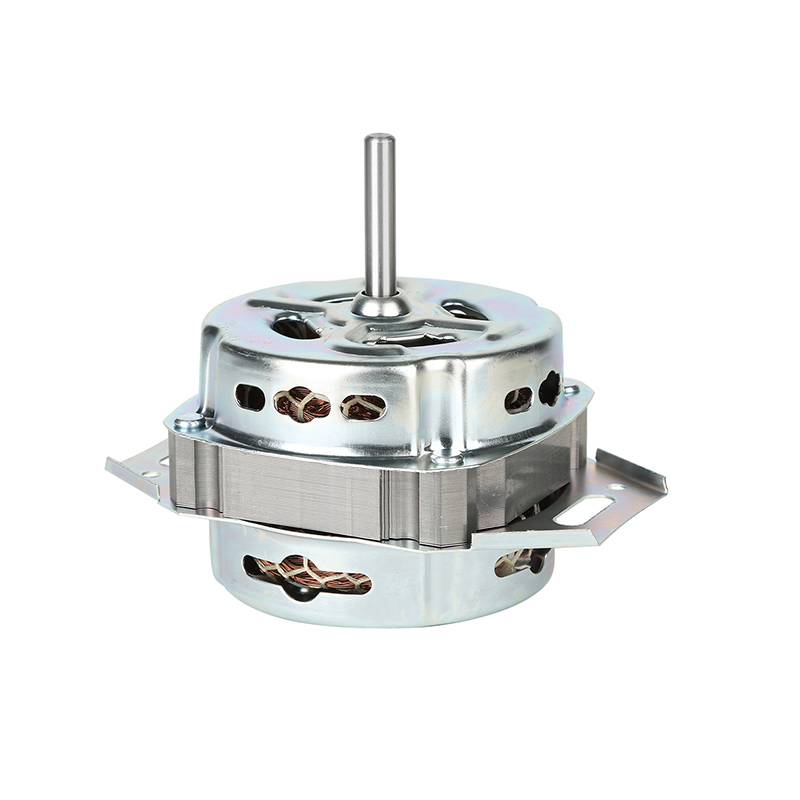
Appliance repair involves high voltage and heavy machinery. You must prioritize safety over speed. Proper preparation prevents electrical shock and physical injury.
You must unplug the machine from the wall outlet immediately. Never assume that turning the control dial to the "Off" position removes voltage. It does not.
Next, you must discharge the run/start capacitor. Capacitors store lethal amounts of electrical energy long after you unplug the unit. Put on safety glasses. Use a heavy-duty screwdriver with an insulated handle. Touch the metal screwdriver blade across the capacitor terminals simultaneously. This bridges the connection and safely discharges any remaining voltage.
Machine designs dictate how you reach the internal components. Front-load units usually offer access through a removable rear service panel. You simply unthread a few screws to expose the drive system.
Accessing a top loading washing machine motor often requires a different approach. You generally need to tilt the unit backward carefully. Support the machine with sturdy wooden blocks. Alternatively, you might need to remove the front or bottom panel. Always consult your specific service manual to locate the exact mounting bolts. Support the heavy metal casing with one hand while you loosen the final bracket bolts.
Modern washers use complex wire harnesses. These feature multiple colored wires and specific pin alignments. Always photograph the wire harness configuration before you pull any plugs. Take multiple pictures from different angles. This visual record ensures safe and accurate reassembly later. A reversed wire can fry your main control board instantly.
Guesswork has no place in appliance repair. A digital multimeter gives you concrete data. It measures electrical continuity and identifies hidden internal shorts. Follow these three testing phases sequentially.
Start with a basic mechanical check. Manually turn the central steel shaft with your fingers. It should rotate smoothly with minimal resistance. If it feels intensely gritty or binds up completely, the internal bearings are seized. You cannot fix seized bearings easily.
Next, inspect the commutator. This is the copper cylinder where the carbon brushes make contact. Look for excessive black soot or deep gouges. Check the carbon brushes if your model has them. If they are worn past the internal spring tension, they cannot deliver electricity. This simple mechanical fault stops the machine dead.
You must verify that the internal copper wire coils are intact. Broken wires disrupt the magnetic field.
Plug your black probe into the COM port.
Plug your red probe into the VΩmA port.
Set the multimeter dial to the lowest Ohms (Ω) setting. This is usually the 200Ω scale.
Touch the probes together briefly. The reading should drop near zero. This confirms your meter works.
Probe the primary electrical terminals on the harness block. Check between the common terminal and the wash/spin terminals.
You want to see a low resistance reading. Typical healthy ranges fall between 1 and 10 Ohms. If your screen displays "OL" (Open Line), it means infinity. An "OL" reading confirms a broken internal wire. The unit is dead.
A ground fault occurs when worn insulation lets bare copper touch the metal casing. This makes the entire exterior electrically live. It is highly dangerous.
Keep your multimeter set to Ohms. Touch one probe to the bare metal exterior casing. Scratch it slightly to bypass any clear protective coating. Touch the other probe to each electrical terminal sequentially. The screen must display "OL". Explain to yourself that any reading other than "OL" indicates a short to ground. A grounded unit is permanently compromised, entirely unsafe, and must be replaced immediately.
Use this reference table to interpret your multimeter readings quickly and accurately.
Test Performed | Expected Healthy Reading | Fault Reading | Diagnostic Conclusion |
|---|---|---|---|
Winding Continuity (Terminals) | 1 to 10 Ohms (Ω) | "OL" (Open Line) | Broken internal wire. Replace unit. |
Ground Fault (Terminal to Casing) | "OL" (Open Line) | Any numerical value | Short to ground. Unsafe. Replace unit. |
Tachometer Sensor (If equipped) | 100 to 200 Ohms (Ω) | "OL" or zero | Failed speed sensor. |
Not all washing machine drive systems are created equally. The type of hardware you have dictates your next steps. Some types invite easy repairs. Others demand full unit replacements.
Many older or budget-friendly washers use universal brushed designs. These rely on small carbon blocks called brushes to transfer electricity to the spinning armature. Over time, friction wears these brushes down.
Best Practice: If you identify worn carbon brushes as the sole failure point, buy a replacement set. This is a low-cost, high-ROI repair. It usually costs under thirty dollars and suits most DIYers perfectly.
Common Mistake: Do not install new brushes on a heavily scarred or pitted commutator. It will destroy the new brushes in weeks.
Modern high-efficiency washers frequently use direct drive systems. These eliminate belts entirely. They attach directly to the back of the wash tub. They consist of two main parts: a stationary stator (copper coils) and a spinning rotor (permanent magnets).
You test the stator coils using the same continuity methods outlined above. However, visual inspections matter more here. Magnet degradation, chipping, or cracked plastic stators often ruin the assembly. You cannot patch a cracked stator. You must perform a complete assembly replacement.
When ordering parts, you face a choice between Original Equipment Manufacturer (OEM) and aftermarket options. OEM parts cost more upfront. However, they guarantee exact fitment and reliable performance. Budget aftermarket alternatives carry significant risks. They often use thinner copper windings. They may lack thermal overload protection. We strongly highlight the performance reliability of OEM replacements. They prevent premature secondary failures.
Architecture Type | Common Failure Points | Repair Complexity | General Cost to Replace |
|---|---|---|---|
Universal Brushed | Worn carbon brushes, melted commutator | Low (Brush replacement is easy) | Low to Medium |
Traditional Belt Drive | Snapped belts, seized pulleys, open windings | Medium | Medium |
Direct Drive (Stator/Rotor) | Cracked stator, stripped rotor splines | High (Requires heavy lifting) | High |
Once you confirm a dead engine block, you face a financial choice. You must decide whether to repair the current appliance or buy a new one. Use logical frameworks to make this decision.
Appliance technicians generally rely on the 50% rule. Calculate the total cost of a replacement part. Add the cost of labor if you plan to hire a professional. If this combined total exceeds 50% of the price of a brand-new washing machine, you should decline the repair. Recommend machine replacement instead. Sinking three hundred dollars into a five-hundred-dollar appliance rarely makes financial sense.
Evaluate the overall age of the machine. Average washers last about 10 to 13 years under normal household use. Replacing a major drive component on a machine older than 8 to 10 years often leads to diminishing returns. Other critical parts degrade simultaneously. The main control board, the tub bearings, and the water inlet valves are highly likely to fail next. You might fix the spin cycle today only to face a massive water leak next month.
If you decide to proceed with the repair, you must order the correct part.
Locate the Model Number: Find the appliance model number on the metal tag inside the door rim or behind the unit.
Avoid Serial Numbers: Never order a replacement using the serial number printed directly on the old engine casing. Manufacturers change sub-contractors frequently. The casing number rarely maps perfectly to modern consumer parts catalogs.
Research Alternatives: If you apply the 50% rule and decide against repairs, start shortlisting new appliances. Look for units featuring robust warranties on the drive system specifically.
Guessing leads to wasted money and deep frustration. Proper multimeter testing provides clear, undeniable data. By following systematic electrical checks, you eliminate assumptions. You confirm the exact status of your windings and ground connections safely.
Confirming a dead hardware component provides genuine peace of mind. It allows you to make informed financial decisions. Keep these final steps in mind:
Always unplug the unit and discharge the start capacitor before touching any internal wires.
Test winding continuity to verify internal copper integrity and test for ground faults to ensure safety.
Use the 50% rule to weigh repair costs against the price of a brand-new appliance.
Order replacement parts using the machine's primary model number, not the part sticker.
A: You can perform a basic mechanical check by spinning the shaft manually to check for seized bearings. You can also visually inspect the drive belt and carbon brushes. However, you cannot definitively test for broken electrical windings or dangerous ground faults without a digital multimeter.
A: A loud humming sound usually indicates the engine is receiving power but lacks the ability to rotate. This is frequently caused by a failed start capacitor, a snapped drive belt, clothing jammed between the tubs, or completely seized internal bearings.
A: Costs vary widely by brand and architecture. Simple universal brushed parts might cost between $100 and $150. Complex direct-drive stator assemblies often range from $200 to $350. OEM parts generally cost more than aftermarket alternatives but offer better reliability.
A: Usually, it is not worth it. At 10 years old, the machine nears the end of its intended lifespan. Even if you fix the drive system, costly components like the main control board, suspension springs, and tub seals are highly likely to fail shortly after.


